
Behind every smoothly operating bar stands a team member often overlooked by customers but crucial for seamless service: the barback. While bartenders take center stage mixing cocktails and interacting with patrons, the barback works behind the scenes, keeping everything running without a hitch. For those interested in what sets these multitasking support staff apart, there is much more to this position than just occasional restocking or cleaning duties. But beyond operational support, how much can a well organized barback actually influence a bar’s gross margin?
Core responsibilities of a barback
The barback’s main objective revolves around ensuring bartenders can focus entirely on making drinks and serving guests. Handling logistics, preparation, and organization falls within their daily routine. Every detail they manage directly affects how quickly drinks reach the tables and how satisfied guests feel with their experiences.
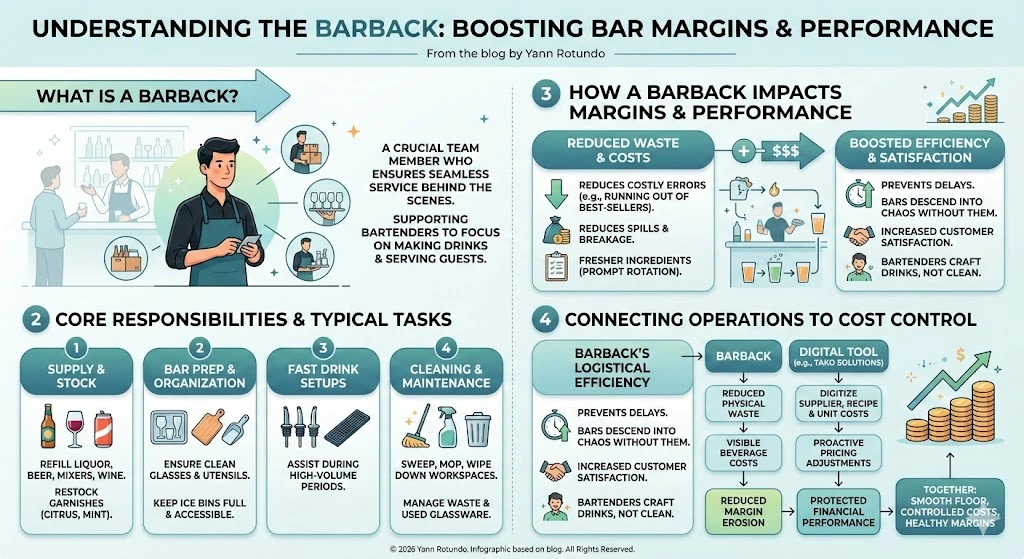
Quick thinking and constant movement make up much of a barback’s shift. Without attention to key details—like clean glassware at hand or fresh garnishes ready to go—a bar quickly descends into chaos. That steady hand in the background keeps operations efficient and stress levels low for the entire team.
What are typical tasks assigned to a barback?
- Refilling liquor bottles, beer kegs, mixers, and wine before supplies run out
- Stocking garnishes such as citrus wedges or mint sprigs, plus preparing them ahead of busy hours
- Ensuring a steady supply of clean glasses and utensils for bartenders
- Keeping ice bins full and accessible throughout the shift
- Assisting with quick drink setups during high-volume periods
- Sweeping, mopping, and wiping down surfaces to guarantee spotless workspaces
- Removing used glassware and trash, managing recycling or waste disposal
- Checking and reporting inventory shortages to supervisors early, avoiding last-minute panic
Each of these actions may seem small on its own. Add them up throughout a night though, and it becomes clear that effective barbacks prevent delays and contribute directly to satisfied customers and a smoother workflow for bartenders.
How does a barback’s role affect overall performance?
The silent management done by barbacks goes well beyond simply restocking shelves. They reduce unnecessary waste by organizing supplies and making sure nothing gets lost or forgotten in a cluttered workspace. Fresh ingredients actually stay fresh thanks to prompt rotation and careful storage, and tools are always where bartenders need them. This minimizes costly mistakes—like running out of best-selling spirits—or losing time to frantic searches for missing items.

Maintaining cleanliness is not just about presentation either. Clear pathways and clean counters prevent slips, spills, and breakage, all of which can hit profits. Bartenders spend less time cleaning up after others and more time crafting drinks and building relationships with guests. Efficiency, safety, and client satisfaction all receive a boost thanks to this essential team member.
Connecting operations to cost control
While barbacks manage the operational flow on the floor, financial performance depends on what happens behind the scenes. This is where digital tools like Tako Solutions reinforce the impact of a strong bar team.
Every delivery restocked by a barback starts with a supplier invoice. When invoices are manually processed, errors, forgotten items, or unnoticed price increases can quietly reduce margins. Tako Solutions automatically digitizes and categorizes supplier invoices by cost center, giving managers immediate visibility into beverage costs and material spending.
If a liquor supplier raises prices or introduces a new product, unit costs are updated in real time. Cocktail recipes and gross margins are recalculated instantly, allowing bar managers to adjust pricing or sourcing decisions before profitability suffers. Instead of discovering margin erosion at the end of the month, decisions can be made the same day.
This combination is powerful: the barback protects service efficiency and reduces physical waste, while Tako protects financial performance and eliminates administrative overload. Together, they create a bar operation that is both smooth on the floor and fully controlled behind the scenes.
Key skills every barback should master
While experience is helpful, certain qualities prove indispensable for any successful barback. Candidates who thrive under pressure, love organized chaos, and possess natural teamwork skills quickly stand out.
An understanding of basic inventory processes and open communication set top performers apart from those simply going through the motions. Bars seeking increased productivity benefit from prioritizing these attributes during hiring and training.
Which personal traits matter most?
- Attention to detail, so no task gets rushed or skipped, preventing bigger issues down the line
- Adaptability, since priorities can shift rapidly during busy nights or unexpected rushes
- Physical stamina, as shifts mean being constantly on the move, lifting heavy boxes, or transporting ice buckets
- Willingness to learn, embracing feedback and refining skills over time
A natural curiosity about bar operations also helps barbacks prepare for upward mobility. Many use this role as a stepping stone to become bartenders themselves, picking up advanced knowledge along the way.
Why are interpersonal abilities important?
Smooth communication ensures everyone—from managers to front-line bartenders—remains on the same page. When a barback spots low supplies, alerts others promptly, or covers for teammates during demanding stretches, the ripple effect spreads positively. Collaboration turns a hectic environment into one operating almost effortlessly.
Excellent listening skills cut down on mistakes, while proactive coordination boosts morale and strengthens workplace bonds. Being approachable and supportive cements the barback as an invaluable member of the team.
Recruitment and onboarding: Setting expectations for success
Clearly outlining job expectations while hiring makes a huge difference in both candidate and employer satisfaction. Emphasizing physical requirements, the pace of the work environment, and willingness to handle unsung jobs weeds out mismatches early. Tailoring training to specific workflows and standards creates confident barbacks ready to step in immediately.
Proper onboarding means demonstrating exactly how the bar prefers workspaces organized, restocking conducted, and waste managed. Walk new hires through common scenarios, offer hands-on practice, and build feedback loops that help refine technique. Exceptional training translates directly to reliable shifts and happier teams.