
Invoices sit at the core of restaurant operations, keeping everything from vendor payments to internal accounting running smoothly. With technology taking a bigger role in food services, there is an ongoing debate about the merits of paper versus digital invoices. While some restaurateurs remain loyal to traditional paper methods, others have embraced the digital shift completely. The difference in cost goes far beyond the price of materials or software licenses; it affects efficiency and speed, error rates, environmental impact, and how well systems can scale as the business grows.
A closer look at this paper vs digital comparison helps restaurant owners balance immediate operational costs against future savings and evolving customer preferences. In today’s competitive hospitality sector, what really drains budgets faster, managing stacks of paperwork or investing in digital tools?
Understanding the basics: paper versus digital invoices
For many years, paper invoices were the standard for restaurant bookkeeping. Offices filled with receipts and handwritten logs, creating clutter and making organization a challenge. Now, digital alternatives promise quicker turnaround and fewer errors. Yet, switching means considering not only cost savings but also the setup and implementation costs. Each method offers its own set of advantages and drawbacks that go deeper than surface-level considerations.
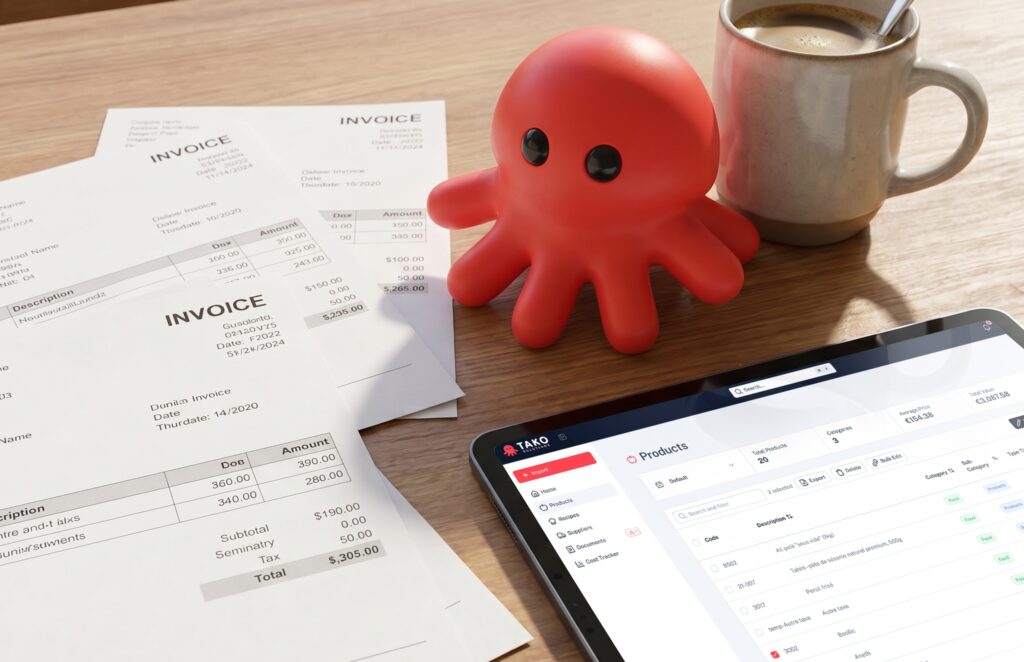
Recognizing these main differences makes it easier for managers or owners to align their restaurant invoice management strategies with broader business goals from regulatory compliance to building better supplier relationships. Regardless of the establishment’s size, these choices shape both daily workflows and long-term planning.
The true cost of paper invoices
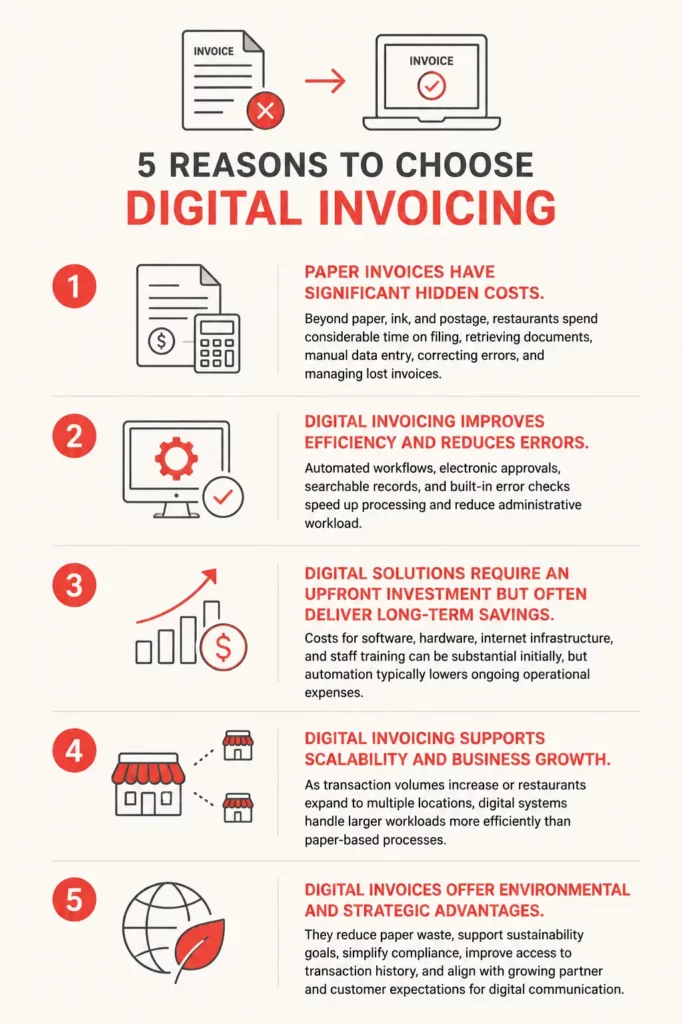
Traditional paper invoicing may seem straightforward, but hidden expenses add up rapidly for restaurants handling dozens or even hundreds of transactions each week. Costs aren’t limited to paper and ink there are also issues related to physical storage, manual data entry, and a greater risk of human error. Many businesses overlook these invisible expenses until profit margins begin to shrink unexpectedly.
Examining where money actually goes when relying on paper documents highlights why understanding these costs is crucial in today’s highly competitive restaurant industry.
Material and handling costs
The most obvious expense comes from buying invoice pads, printer ink, filing cabinets, and delivery envelopes. Over time, especially as transaction volumes rise, these costs accumulate. When postage or courier fees for mailed invoices are included, operational costs climb even higher.
Handling continues after printing. Employees often spend time filing, retrieving, or transporting documents, diverting valuable labor away from customer-facing roles or food preparation. In high-turnover environments, training new staff further increases the overall effort required.
Manual vs automated processes
Manual data entry introduces opportunities for costly mistakes. Transposing numbers onto spreadsheets, reconciling ledgers, and double-checking calculations all consume time and can slow down payment cycles. These inefficiencies can strain relationships with suppliers.
Misplaced or lost invoices demand hours spent searching records, increasing the likelihood of late payments and missed early-payment discounts. As the business expands, managing every document becomes increasingly difficult and expensive.
- Costs for reprinting lost documentation
- Additional clerical hours for correcting errors
- Higher risk of duplicate payments
Switching to digital: what changes?
Digital invoicing brings significant improvements in efficiency and speed. Automating much of the process reduces errors and typically requires fewer staff hours. However, transitioning presents challenges, particularly for older establishments less familiar with cloud platforms or e-invoice standards.
As restaurants focus on scalability and adaptability, investing in digital solutions often delivers a rapid return on investment—provided the transition is carefully planned and managed.
Setup and implementation costs
Moving to digital involves upfront investment in hardware, software licenses, and sometimes professional support. Purchasing scanners, tablets, or secure computers can stretch tight budgets. Ensuring reliable internet access—sometimes with backup options—adds another layer to initial setup and implementation costs.
Training staff takes both time and resources, especially if the team lacks technical experience. Some digital solutions offer trial periods, but most require commitment before clear benefits are realized.
Efficiency and speed gains
Once implemented, the efficiency and speed of digital systems become clear. Automated platforms capture invoice details quickly, route approvals electronically, and store everything in searchable formats. This makes matching purchase orders to invoices easier and simplifies audits or dispute resolution.
Workflows are streamlined, with notifications prompting timely reviews and payments. For larger operations, this translates into notable reductions in days payable outstanding (DPO), improving cash flow and vendor partnerships.
- Faster processing times per invoice
- Automated reminders and error checks
- Smoother bulk uploads and exports
Evaluating broader impacts: environment, preferences, and growth
Beyond simple financials, several subtler factors deserve attention. These influence daily operations and set the stage for sustainable, long-term growth. Smart restaurant leaders consider environmental impact, shifting regulations, and evolving customer preference trends alongside direct cost savings.
Thinking ahead pays off—especially as government agencies introduce incentives or mandates supporting electronic documentation.
Environmental impact
Paper-based invoicing uses trees, water, and energy throughout production and disposal. Even with recycling efforts, many receipts end up in landfill due to ink or adhesive contamination. Digital invoicing, while dependent on servers and devices, greatly reduces paper waste and cuts carbon footprint when managed responsibly.
Restaurants aiming to strengthen eco-friendly reputations benefit from digital’s ability to reduce resource use and communicate sustainability commitments to customers and partners.
Customer preference and partner requirements
More business partners—and even some diners—now expect restaurants to use transparent, modern communication channels. Digital invoices make information sharing easier, whether for payments, transaction histories, or compliance documentation.
Some vendors may eventually require electronic-only transactions, leaving those reliant on paper scrambling to adapt. Still, a segment of clients might request printed copies, so maintaining flexible capabilities remains useful.
- Easy retrieval of transaction history
- Seamless integration with loyalty or rebate programs
- Adaptable formats for international compliance
Weighing the pros and cons of both approaches
Choosing between paper and digital depends on context—team strengths, business pace, local rules, and target clientele. Restaurants with complex supply chains usually gain the most from automation, while smaller venues may stick with paper unless volume spikes.
A realistic evaluation prevents wasted spending and avoids unnecessary disruption, especially as business priorities evolve from survival to growth.
Pros and cons of paper invoices
Advantages of paper include a minimal learning curve, no upfront technical costs, and physical records for those wary of screens. Disadvantages surface through ongoing material purchases, increased recordkeeping labor, and vulnerability to disasters such as fire or flooding.
Those using paper constantly deal with misplaced files, growing clutter, and slower reporting. Legal risks also increase if proper archiving falls short.
Pros and cons of digital invoices
Digital solutions are ideal for organizations prioritizing efficiency and speed. They provide instant upgrades, remote access, robust analytics, and almost eliminate transcription errors. Built-in backups and disaster recovery mean losing years’ worth of records is far less likely.
Initial investments and adaptation periods present hurdles. Ongoing subscriptions or platform updates continue post-launch but tend to be lower than perpetual material costs. Smaller sites sometimes resist change out of habit, missing out on substantial long-term benefits.
- Reduced chance of administrative bottlenecks
- Scalability for expanding locations
- Customizable, branded invoice templates
Common questions about restaurant invoice choices
What are the biggest operational costs differences between paper and digital invoices?
- Ongoing paper and ink expenses compared to annualized software fees
- Extra payroll hours for manual data entry and review
- Physical storage charges versus cloud-based document storage
Does digital invoicing always provide cost savings in the long run?
- The best returns appear for multi-location brands
- Potential ROI increases as business complexity grows
Which method scores better for environmental impact?
- Less paper consumed and discarded
- Fewer deliveries for supplies
- Easier recycling of obsolete electronics
What should be considered before switching from paper to digital invoicing?
- Map out existing processes thoroughly
- Account for all setup and maintenance costs
- Collect feedback from users and business partners