
Choosing the right number of suppliers is one of those decisions that can truly shape how smoothly a restaurant operates behind the scenes. Some establishments collaborate with a wide range of partners, while others keep their vendor list intentionally short. With so much emphasis today on efficiency, cost control, and operational consistency, it has become increasingly relevant to consider whether working with fewer suppliers, or embracing supplier consolidation, can offer more advantages than juggling multiple vendors across different categories.
The business world often highlights agility and flexibility, yet achieving the ideal blend between risk management and purchasing simplification is now just as crucial as curating an appealing menu. This naturally prompts a key question: should a restaurant focus on single vs multiple suppliers? Grasping the implications could influence everything from inventory management to the quality of the customer’s dining experience.
The traditional approach: working with multiple suppliers
Historically, restaurants have tended to build relationships with several suppliers, and sometimes dozens. Many chefs source produce directly from local farms, purchase seafood from specialist fisheries, and order cleaning supplies elsewhere, all in pursuit of quality or cost advantages. The reasoning is that spreading out purchases helps minimize disruption if any single supplier faces challenges. Additionally, this diversity allows for more freedom in negotiations and access to unique ingredients.
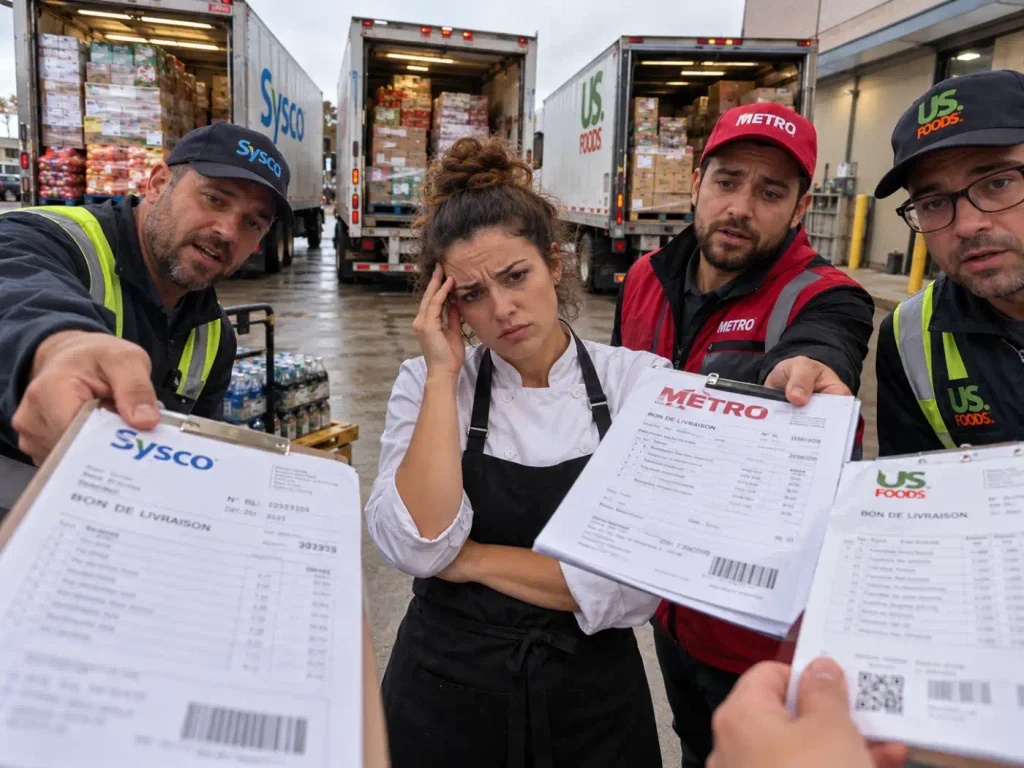
Diversity among vendors might seem attractive, giving managers additional choices when prices shift or when seasonality affects product availability. More variety means not only a better selection but also greater adaptability if something unexpected occurs on the supply side.
The downside of too many suppliers
Managing a broad network of partners quickly becomes time-consuming, especially for smaller teams already stretched by daily operational demands. Each supplier adds invoices, delivery schedules, communications, and documentation requirements. Often, the cumulative administrative burden is underestimated by those new to restaurant operations.
Relying on a large mix of partners may sound like effective risk management, but it often introduces inefficiencies. More time spent comparing prices, resolving billing errors, or handling late shipments can distract staff from essential responsibilities. When everyone is busy chasing paperwork, efficiency and focus can slip rapidly.
Supplier consolidation: what does it involve?
Supplier consolidation means reducing the number of vendors a restaurant works with, typically by consolidating orders through select partners who can satisfy broader needs. For instance, instead of using five separate sources for meat products, pantry staples, paper goods, beverages, and specialty items, some restaurants ask a major distributor to cover most requirements, streamlining the process with fewer contacts.
This strategy centers on streamlining operations and simplifying vendor management. The goal is not necessarily to depend on a single massive supplier every time, but to narrow down the partner roster to enhance efficiency and strengthen cost control.
What are the main benefits of supplier consolidation?
Restaurants exploring this approach frequently notice immediate advantages. Most notably, there is less complexity in ordering and payment processes, allowing staff to reclaim valuable hours and dedicate their energy to guests and food quality.
Embracing supplier consolidation often improves negotiating power as well. Larger, recurring orders make a restaurant more attractive to suppliers eager to capture increased business share, leading to potential bulk discounts and loyalty incentives. Fewer points of contact mean reduced communication breakdowns and ordering mistakes, helping maintain stronger operational consistency.
Efficiency gains
By cutting down on individual transactions, restaurants manage inventory with more precision. It becomes simpler to spot usage trends, avoid overordering, and reduce waste. Administrative tasks that once consumed hours can transform into routines managed within minutes.
Tracking deliveries also grows easier. Fewer trucks arriving throughout the week results in less interruption, letting staff plan around consistent drop-off times rather than constantly adjusting for last-minute changes from various partners.
Cost control and purchasing simplification
Larger, consolidated orders often open the door to better price negotiations. Restaurants can work closely with suppliers to create custom deals based on actual demand. Some vendors provide preferred pricing or rebates for ongoing commitments, reinforcing financial predictability.
Cost control extends beyond purchase prices. There are hidden savings in minimized administrative labor, fewer bank transfers, consolidated billing, and even reduced packaging waste. All these elements combine to help further simplify purchasing and lower total operating costs.
Potential risks of relying on fewer suppliers
While the simplicity of supplier consolidation is appealing, focusing too heavily on a limited group may introduce vulnerabilities. If one chosen partner encounters sudden disruptions, such as a broken supply chain, delayed shipments, or unexpected shortages, the resulting issues could be larger than if more options remained available.
Over-reliance may also weaken bargaining leverage over time. When fewer partners know they are the primary providers, they may become less competitive on pricing or innovation. Maintaining clear service agreements and managing expectations becomes increasingly important in this context.
Risk management strategies
To offset the risks associated with consolidation, experienced restaurant managers regularly review supplier performance and keep backup plans. Some split critical items between two vendors while still consolidating other categories to preserve resilience.
Ongoing assessments of market conditions, product quality, and logistical reliability ensure no single partnership dominates excessively. Contracts may include penalty clauses or contingency arrangements for delays and substitutions to protect interests.
Maintaining quality and operational consistency
Sourcing too much from one place creates the risk that quality dips go unnoticed until customers complain. Regular quality checks, blind taste tests, and occasional external audits help uphold high standards consistently.
Clear documentation, periodic audits, and transparent communication assist in catching early warning signs before minor problems escalate. This proactive approach keeps kitchen operations smooth and front-of-house teams confident in what is being served.
Finding the optimal number of suppliers for each restaurant
There is no universal answer to the optimal number of suppliers. The right figure depends on unique factors such as menu complexity, location, desired food quality, storage capacity, and sales forecasting abilities.
A seasonal bistro highlighting daily market finds may justify more vendors. In contrast, high-volume casual concepts aiming to reduce labor costs often prefer supplier consolidation. Striking the ideal balance between resilience and simplicity defines successful vendor management in the modern hospitality landscape.
- Assess menu variety to estimate sourcing diversity needs.
- Evaluate storage and delivery infrastructure to gauge consolidation feasibility.
- Identify non-negotiable items (such as unique sauces or international spices).
- Consider growth projections and likely sales volume fluctuations.
- Periodically review contracts to adapt to changing business realities.
Many restaurants experiment by moderately consolidating, trimming a dozen partners to a core group of three or four, then monitoring the impact over a few months. Tracking metrics like invoice reconciliation time, cost per meal, and frequency of missed deliveries provides objective insight on whether further change is warranted.
Maintaining honest, open dialogue with remaining partners during transitions is invaluable. Suppliers capable of evolving alongside a restaurant’s changing needs often reward loyalty with dedicated service and attention to detail.
What role does technology play in vendor management?
Modern software solutions are transforming how restaurants handle vendor management. Inventory management platforms easily integrate data from consolidated partners, providing alerts about possible shortages, expiration dates, or cost anomalies.
Digital records streamline order histories, contract terms, and dispute resolution, minimizing costly oversights. Analytics dashboards highlight opportunities for added efficiency or call attention to recurring challenges that require further analysis.
Frequently asked questions about restaurant supplier strategies
How does supplier consolidation affect restaurant efficiency?
Supplier consolidation significantly reduces the time dedicated to ordering, billing, and relationship management. Fewer transactions translate into quicker approvals, simplified delivery scheduling, and less confusion during inventory checks. Restaurant staff can then devote more attention to guest service and food preparation goals.
- Streamlined operations with less paperwork
- Faster issue resolution and clearer communication lines
- Greater focus on guest satisfaction
Are there ideal numbers of suppliers to target?
Most restaurants operate effectively with three to six core suppliers, though the precise number varies widely. Smaller venues may function seamlessly with just two partners, while complex operations, such as hotels or multi-cuisine spaces, might need ten or more to secure essential ingredients. The key is balancing risk management with operational simplicity.
| Type of restaurant | Typical supplier count |
|---|---|
| Café, bakery | 2 to 4 |
| Standard casual dining | 3 to 6 |
| Fine dining or large hotel | 7+ |
How can a restaurant reduce supplier-related risks after consolidating?
Strong contracts, regular service reviews, and secondary emergency suppliers all help mitigate risks tied to heavy reliance on a few vendors. Periodic quality assessments and diversified sourcing for essential products maintain flexibility within a largely consolidated framework.
- Set clear expectations and penalties in contracts
- Keep a shortlist of backup vendors for emergencies
- Monitor market trends and product quality closely
Does supplier consolidation work for every type of restaurant?
Not always. While many restaurants benefit from the simplicity and savings of fewer partners, unique concepts, such as farm-to-table venues or kitchens specializing in imported goods, may deliberately use a higher number of suppliers to promote creativity and authenticity. Each business model requires its own approach to vendor management and purchasing processes.