
In the world of restaurants, organizing a kitchen, maintaining production consistency, and optimizing workflow often depend on one essential tool: the restaurant technical sheet. A well-designed technical sheet is far more than a simple recipe card. It acts as the backbone for culinary precision, cost control, and flawless team communication. Whether developing new creations or preserving the consistency of signature dishes, mastering the creation of technical sheets becomes vital for smooth restaurant operations.
What is a technical sheet and why use one?
Many professionals might mistake a technical sheet for just another recipe, but its role extends much further. Within a commercial kitchen, the creation of a technical sheet brings together all crucial details required to ensure a dish can be reproduced reliably, no matter who prepares it or when. This document clarifies processes, quantities, and presentations, which helps maintain a consistent service from shift to shift.
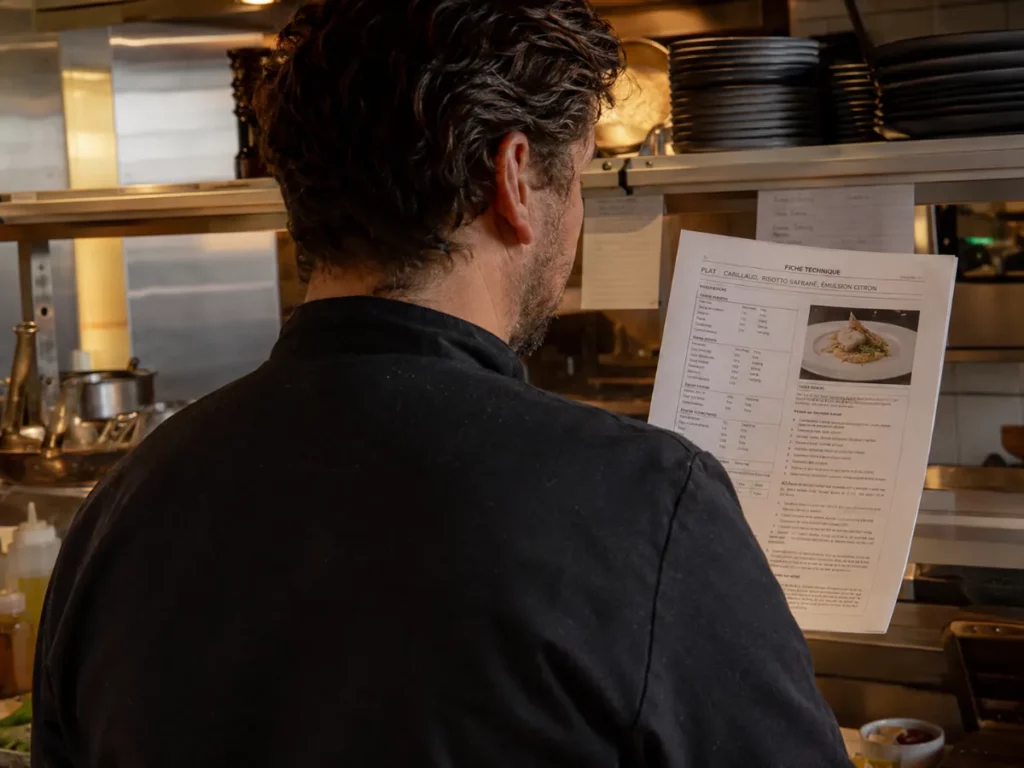
For owners and chefs, the technical sheet also provides key information for accurate cost calculation and efficient inventory management. By documenting every ingredient and step, tracking restaurant expenses becomes straightforward. In this way, the technical sheet serves both as an operational guide for teams and a strategic asset for management.
The key components of a restaurant technical sheet
Clarity and structure form the foundation of strong documentation. Before focusing on layout, selecting the right elements ensures the accessibility and simplicity needed by kitchen staff. An effective technical sheet typically covers topics ranging from product identification to precise step-by-step instructions.
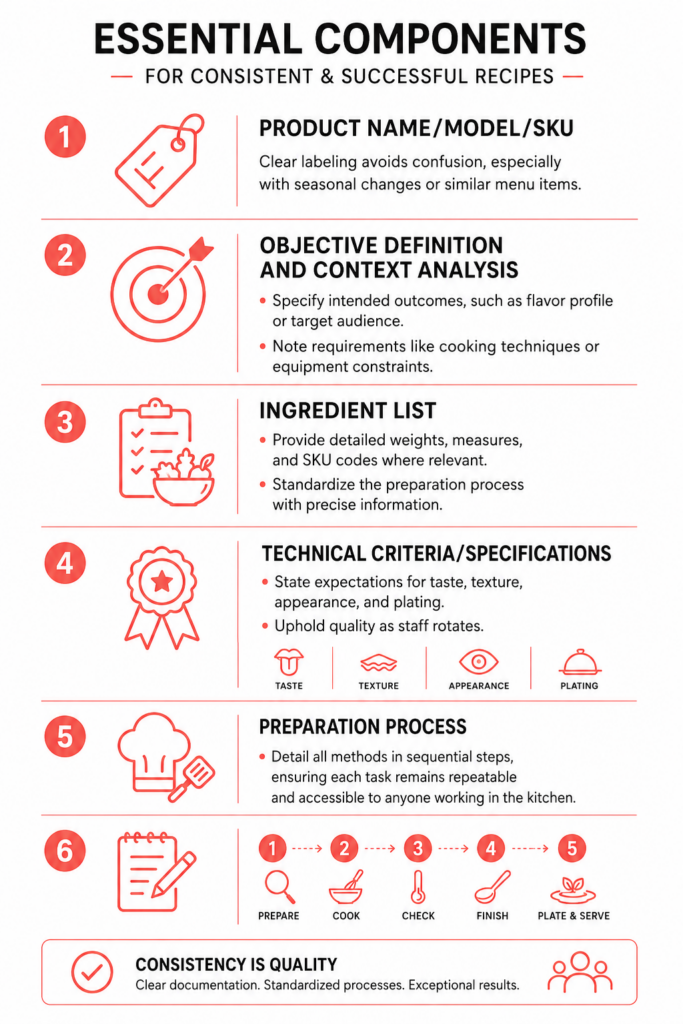
Essential components include:
- Product name/model/sku: Clear labeling avoids confusion, especially with seasonal changes or similar menu items.
- Objective definition and context analysis: Specify intended outcomes, such as flavor profile or target audience, and note requirements like cooking techniques or equipment constraints.
- Ingredient list: Provide detailed weights, measures, and SKU codes where relevant to standardize the preparation process.
- Technical criteria/specifications: State expectations for taste, texture, appearance, and plating to uphold quality as staff rotates.
- Preparation process: Detail all methods in sequential steps, ensuring each task remains repeatable and accessible to anyone working in the kitchen.
Role of document structure/layout and accessibility/simplicity
Content alone does not make a technical sheet effective, its structure and layout are equally important. Information should be organized with bold headers, tables, or bullet points, making it easy for staff to find what is needed quickly during busy periods. Thoughtful design means less time searching and fewer mistakes under pressure.
Simplicity in language is also critical. Instructions must remain clear and direct to prevent errors, especially when new team members join. With accessible wording, everyone, regardless of experience level, can follow procedures confidently from day one.
Integrating product identification and specification details
Accurate product identification minimizes costly mix-ups during ordering or preparation. Including unique identifiers, such as a product name/model/sku, streamlines stock rotation and makes supplier communication smoother. Assigning codes to ingredients reduces confusion for proteins, vegetables, or garnishes alike.
Clearly documented technical criteria/specifications help transform quality checks into simple, objective steps. Visual references, photo examples, and specific descriptions (like “golden exterior, moist interior” for fried chicken) provide guidance that leaves little room for interpretation or error.
Best practices for drafting step-by-step instructions
Detailed step-by-step instructions are crucial to the success of any technical sheet. Ambiguous directions invite inconsistency, so every instruction should specify required equipment, timing, and order. Clarity at this stage prevents confusion and supports high standards throughout the brigade.
When outlining the preparation process, never assume background knowledge unless referenced elsewhere. Even the most experienced cooks benefit from logically sequenced actions, particularly when juggling multiple orders. Precision benefits both newcomers and seasoned staff members alike.
Sequencing and clarity in preparation process
The sequence of tasks in the preparation process deserves careful attention. Group related steps together for efficiency and avoid forcing staff to cross-reference excessively. Kitchens may choose between numbered systems or concise bullet lists, select whichever best enhances the document structure/layout for the establishment’s needs.
If special techniques are involved, such as sous-vide or fermentation, include notes or visual aids to support those unfamiliar with them. Diagrams and tables further improve accessibility, minimizing ambiguity in fast-paced situations.
Avoiding common pitfalls in technical criteria
Clear definitions of desired outcomes lead to fewer mistakes. Instead of vague directions like “cook until done,” offer explicit times, temperatures, or visual cues. Standardized terms (“medium rare,” “julienned,” “al dente”) should be defined within the technical sheet or referenced from a kitchen glossary to remove uncertainty.
An organized checklist at the end of the process, covering tasting, temperature checks, and presentation review—helps reinforce quality and supports continuous improvement.
Tips for objective definition and context analysis
Every technical sheet should start by stating the specific purpose of the dish. Is the plate meant for à la carte, catering, or tasting menus? Objective definition aligns team expectations and prevents wasted resources or misplaced ingredients.
Context analysis involves considering factors such as seasonality, available equipment, and anticipated guest volume. Regularly revisiting technical sheets during menu updates ensures adaptation based on customer feedback or supplier changes.
Connecting objectives to measurable outcomes
Defining goals from the beginning allows for easier evaluation after service. When a technical sheet highlights crispness, balanced seasoning, or exact portion sizes, staff have concrete targets for assessment. This approach encourages ongoing improvement and fosters professional pride among team members.
For example, specifying “target food cost below 30%” connects creative decisions directly to profitability, giving direction during menu development.
Bringing context into routine operations
The most useful technical sheets are dynamic rather than static. As seasons change or business evolves, regular reviews capture new insights and adapt to added constraints. Adjusting sides for produce availability or altering plating for events are practical examples of this flexibility.
Engaging line cooks and prep teams in these updates often leads to valuable suggestions, uncovering efficiencies or clarifying confusing sections. Collective input strengthens documentation and daily workflow.
Ensuring accessibility and usability of documentation
Once a technical sheet contains all critical information, accessibility becomes the next priority. Documents buried in folders or filled with jargon are useless during a dinner rush. Keep essential sheets visible and make sure every team member knows how to access the latest version.
Digital solutions like tablets allow instant searches and real-time updates. Some kitchens prefer color-coded binders or laminated copies near workstations. The goal is always a balance between durability, security, and practical utility for day-to-day operations.
- Use clear, bold headings and divided sections for rapid navigation
- Add visual aids (photos, diagrams) where processes could be confusing
- Regularly update and review sheets with input from kitchen and management
- Train all new staff on the chosen document structure/layout
Practical examples and template ideas for restaurants
Putting these principles into practice, here’s what an effective technical sheet might look like in a restaurant setting. Focusing on detail, clarity, and alignment with operational realities saves time and frustration during peak hours. Customizing templates according to concept, whether for fine dining or casual eateries—ensures every kitchen benefits from structured documentation.
A suggested framework for a single dish includes:
- Dish name / SKU: For accurate tracking and ordering
- Description / Objective: Notes about flavor, appearance, and seasonality
- Ingredients (with units): Quantities, supplier info, allergen details
- Preparation steps: Numbered, annotated instructions as needed
- Technical criteria: Cooking doneness, garnish position, plating specifics
- Cost calculations / Yield notes: Servings per batch, cost per serving
- Special considerations: Equipment restrictions, advance prep, holding guidelines
This modular method streamlines training and simplifies onboarding for new hires. Chefs managing frequent menu changes quickly see how robust templates reduce paperwork, freeing up energy for creativity and guest satisfaction.
Questions around technical sheets in hospitality
What are the most important elements in creating a technical sheet?
- Clear product identification (name, model/SKU)
- Accurate ingredient measurements and sourcing information
- Step-by-step instructions outlining every part of the preparation process
- Precise technical criteria/specifications for quality assurance
- Easy-to-read document structure/layout supporting accessibility
Combining these aspects ensures consistency and efficiency for both frontline teams and managers monitoring costs or training programs.
How often should restaurants update their technical sheets?
Update frequency depends on menu changes and supply chain dynamics. At minimum, review before seasonal transitions or after introducing new suppliers to catch issues early. Many establishments schedule quarterly reviews, while some assess weekly or monthly based on feedback and quality data.
- After launching new dishes or making menu changes
- Following major shifts in ingredients or equipment
- In response to repeated staff questions or complaints
Can digital tools improve technical sheet accessibility?
Digital platforms simplify technical sheet updates and organization, boosting accessibility for busy teams. Centralized access ensures everyone refers to the latest version, and edits are immediate. Some systems even offer built-in costing calculators, allergen tracking, or multimedia integration for greater clarity.
- Instant retrieval through search functions
- Support for multimedia demonstrations
- Streamlined collaboration and approval workflows
| Method | Accessibility rating |
|---|---|
| Printed binders | Medium |
| Digital software | High |
| Laminated station copies | Medium-High |
Why is including a context analysis vital in the technical sheet?
Context analysis emphasizes seasonality, local customer preferences, and equipment limitations that impact daily execution. Accounting for these factors prevents waste and gives flexibility during supply disruptions or busy periods.
- Aligns recipes with operational realities
- Encourages adaptability during menu changes
- Identifies potential obstacles early for smoother implementation