Sub-recipes that update every dish
Cost a veal stock, a beurre blanc or a shortcrust pastry once and reuse it everywhere. When one of its ingredients changes price, every dish that uses it is recalculated.

Whole fish, bones for stock, seasonal vegetables, sauces reduced for hours: in a traditional kitchen, the price on the invoice is never the cost on the plate. Tako reads your supplier invoices and turns them into recipe cards costed at real yield, updated every time a supplier changes a price.
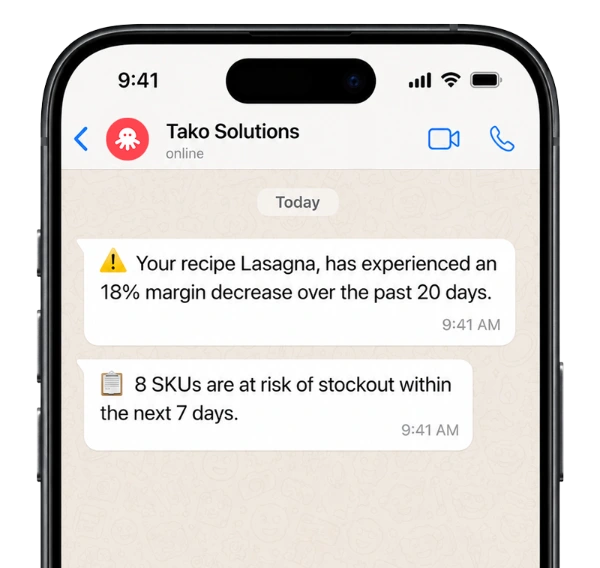
Send the butcher’s, the fishmonger’s and the wine merchant’s invoices by photo, PDF or WhatsApp. Tako extracts each product and its price per kilo or litre, then applies it to your recipe cards, stocks, sauces and garnishes, so the cost of every dish follows the market without anyone updating a spreadsheet.

Small producers, wholesalers and wine merchants all invoice differently. Each document is read line by line, verified against its printed total and kept by supplier, credit notes included.

Asparagus in spring, game in autumn: follow the price history of every product per kilo, get alerted when a price jumps and compare the same product across your suppliers.

Set a wastage percentage for each ingredient, from filleting a fish to peeling vegetables, and Tako costs the portion that reaches the plate, not the weight you bought.

Your spend compared with last week, alerts on price jumps and unusual orders, read in two minutes between lunch and dinner.

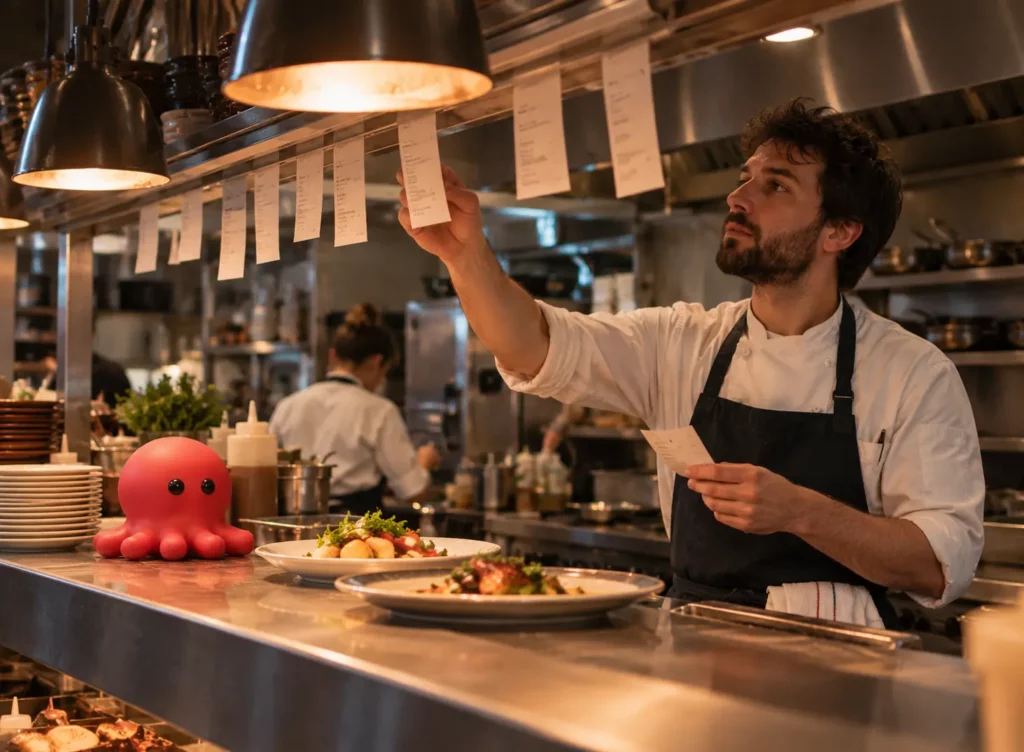
A full-service restaurant buys raw products and transforms them: a fish loses half its weight on the board, bones become stock, one sauce is used in five dishes. Menus follow the seasons and suppliers change their prices from week to week. Food cost is often aimed at around 28 to 35%, but worked out by hand, with guessed yields and sub-recipes left out, it is always wrong and always late. Tako keeps it accurate and up to date.
Each dish shows its cost at real yield and its margin at your selling price. Before printing a new seasonal menu or chalking up a daily special, test prices in the margin simulator and keep only the dishes that earn their place.
Add up the cost of each ingredient for one portion, adjusted for trim and cooking loss, plus the share of any sub-recipe it uses. Tako does this automatically from your recipe cards and your latest invoice prices.
Give each ingredient a wastage percentage. Tako then costs the gross quantity you have to buy to get the net quantity on the plate, so a filleted fish or a peeled vegetable is costed correctly.
Yes. Create them as sub-recipes with their batch yield in litres or kilos. Every dish that uses them picks up their cost, and updates when an ingredient price moves.
Divide the cost of the dish by your target food cost percentage, then round to a menu price. Tako’s margin simulator shows the resulting margin and lets you try several prices before you decide.
Tako is free for one restaurant, with no time limit and no credit card. Extra apps, such as multi-site for groups, are optional monthly add-ons.